
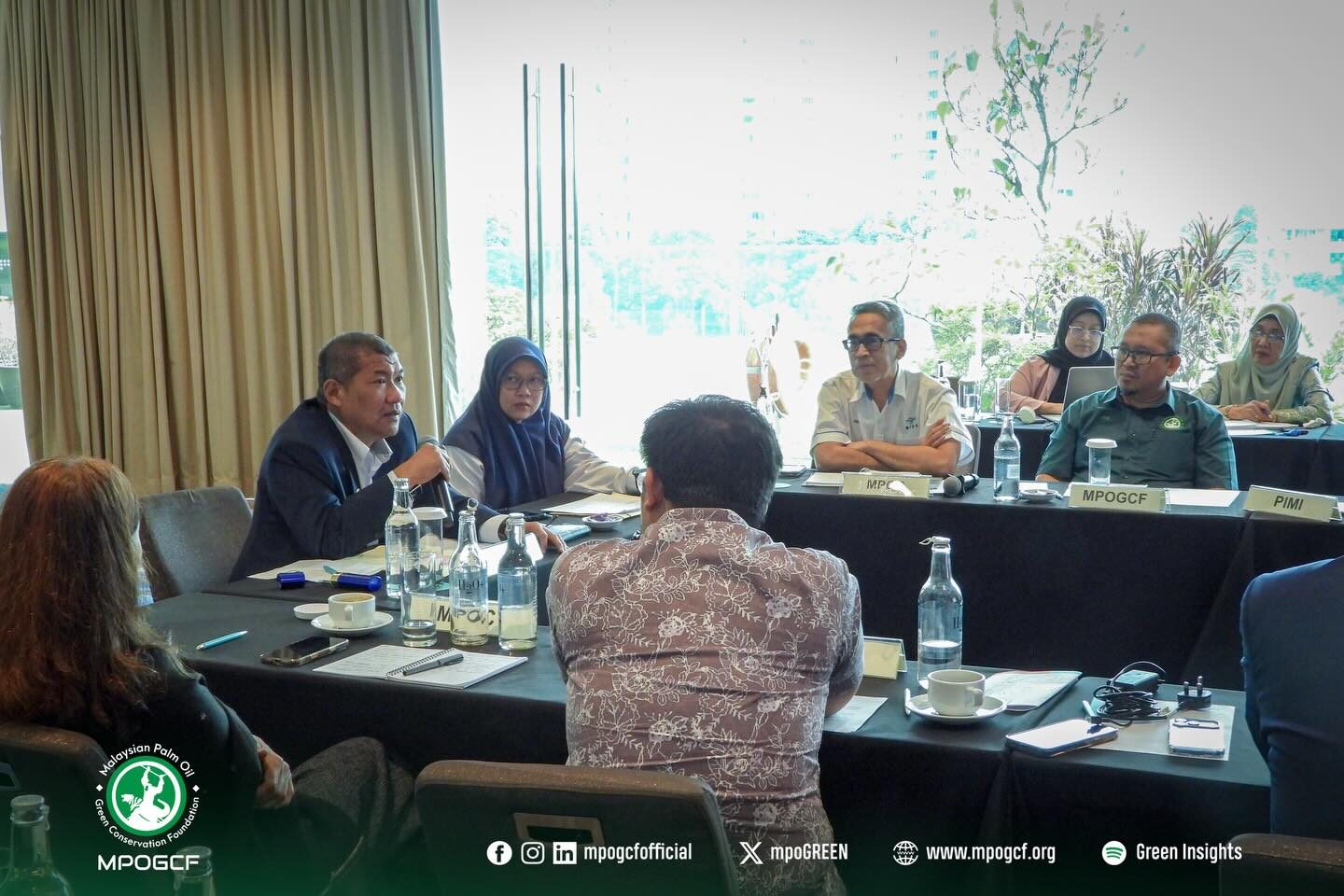
Bahagian Kemajuan Industri Sawit dan Sago (BISS), Kementerian Perladangan dan Komoditi (KPK) dengan kerjasama Minyak Sawit Mampan Malaysia (MSPO) telah menganjurkan Bengkel Penyelarasan dan Hala Tuju Strategik Industri Sawit Negara pada 27 dan 28 Januari 2026.
Bengkel ini berfungsi sebagai platform strategik bagi mengenal pasti jurang dasar dan isu pelaksanaan, serta merangka cadangan penambahbaikan secara bersepadu ke arah pengukuhan daya saing dan kemampanan industri sawit negara. Ia turut bertujuan memperkukuh penyelarasan dan kerjasama antara kementerian dan agensi berkaitan.
Fokus perbincangan merangkumi empat kluster utama iaitu kemampanan, pemerkasaan pekebun kecil, pasaran dan peningkatan produktiviti, serta pembangunan masa hadapan industri sawit termasuk pengukuhan sektor hiliran dan penerokaan peluang baharu seperti kredit karbon.
Majlis penutup yang disempurnakan oleh Timbalan Ketua Setiausaha (Perladangan dan Komoditi) KPK, Dato’ Razali Mohamad, menegaskan kepentingan penyelarasan dasar secara menyeluruh antara kementerian, agensi dan industri bagi memastikan sektor sawit negara kekal mampan, berdaya saing dan relevan dalam menghadapi cabaran global serta keperluan pasaran masa hadapan.
Bengkel ini turut dihadiri oleh pegawai KPK termasuk BISS, serta wakil agensi termasuk Ketua Pengarah Lembaga Minyak Sawit Malaysia (MPOB), Datuk Dr. Ahmad Parvez Hj. Ghulam Kadir; Ketua Pegawai Eksekutif Majlis Minyak Sawit Malaysia (MPOC), Belvinder Sron; Ketua Pegawai Eksekutif MSPO, Mohamed Hafizin Mohamed Tajudin; dan Pengurus Besar Yayasan Pemuliharaan Hijau Minyak Sawit Malaysia (MPOGCF), Hairulazim Mahmud.
_____________
The Palm Oil and Sago Industry Development Division (BISS), Ministry of Plantation and Commodities (KPK), in collaboration with Malaysia Sustainable Palm Oil (MSPO), organised the National Palm Oil Industry Policy Alignment and Strategic Direction Workshop on 27 and 28 January 2026.
The workshop served as a strategic platform to identify policy gaps and implementation challenges, as well as to formulate integrated improvement recommendations aimed at strengthening the competitiveness and sustainability of the national palm oil industry. It also sought to enhance coordination and collaboration between the ministry and relevant agencies.
Discussions focused on four key clusters, namely sustainability, smallholder empowerment, market development and productivity enhancement, as well as the future development of the palm oil industry, including strengthening the downstream sector and exploring new opportunities such as carbon credits.
The closing ceremony, officiated by the Deputy Secretary-General (Plantation and Commodities) of KPK, Dato’ Razali Mohamad, underscored the importance of comprehensive policy alignment among ministries, agencies and industry players to ensure that the national palm oil sector remains sustainable, competitive and relevant in addressing global challenges and future market demands.
The workshop was also attended by officers from KPK, including BISS, as well as representatives from related agencies, including the Director-General of the Malaysian Palm Oil Board (MPOB), Datuk Dr. Ahmad Parvez Hj. Ghulam Kadir; Chief Executive Officer of the Malaysian Palm Oil Council (MPOC), Belvinder Sron; Chief Executive Officer of MSPO, Mohamed Hafizin Mohamed Tajudin; and the General Manager of the Malaysian Palm Oil Green Conservation Foundation (MPOGCF), Hairulazim Mahmud.