
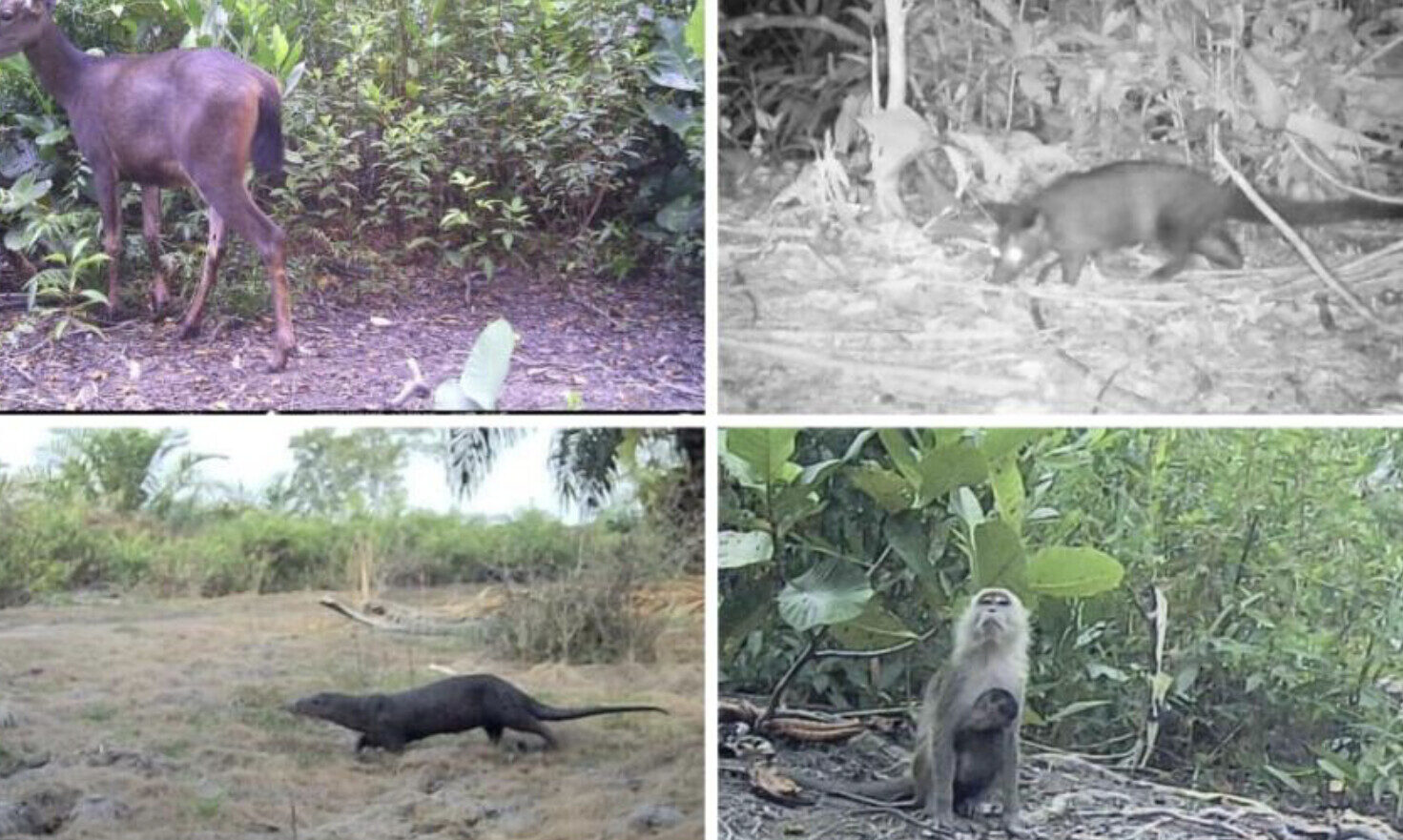
KUALA LUMPUR. 26 MAR 2026 – A recent study has revealed that forest edge areas within oil palm plantations are not merely transitional zones, but function as important ecological corridors that enable wildlife to move safely between forest reserves and surrounding landscapes. Findings from a study conducted by experts from the Global Environment Centre (GEC) in the vicinity of Binsulok Forest Reserve and Klias Forest Reserve in Beaufort, Sabah indicate that these forest edges play a significant
role in supporting the movement of various fauna species. Wildlife recorded using these corridors include large mammals such as sambar deer, bearded pigs, leopard cats and proboscis monkeys, as well as smaller mammals, reptiles, resident birds and migratory bird species. Over a 12-month period, a total of 13 camera traps were strategically installed along the boundaries of oil palm plantations adjacent to forest reserves to monitor wildlife movement patterns. This biodiversity data collection project commenced in December 2024 and concluded in December 2025, involving several privately owned oil palm plantations as well as independent smallholders in the Beaufort district, located in southwestern Sabah.