Laporan oleh Ts. Daniel Pamin
Eksekutif Jabatan Pemuliharaan dan Kemampanan
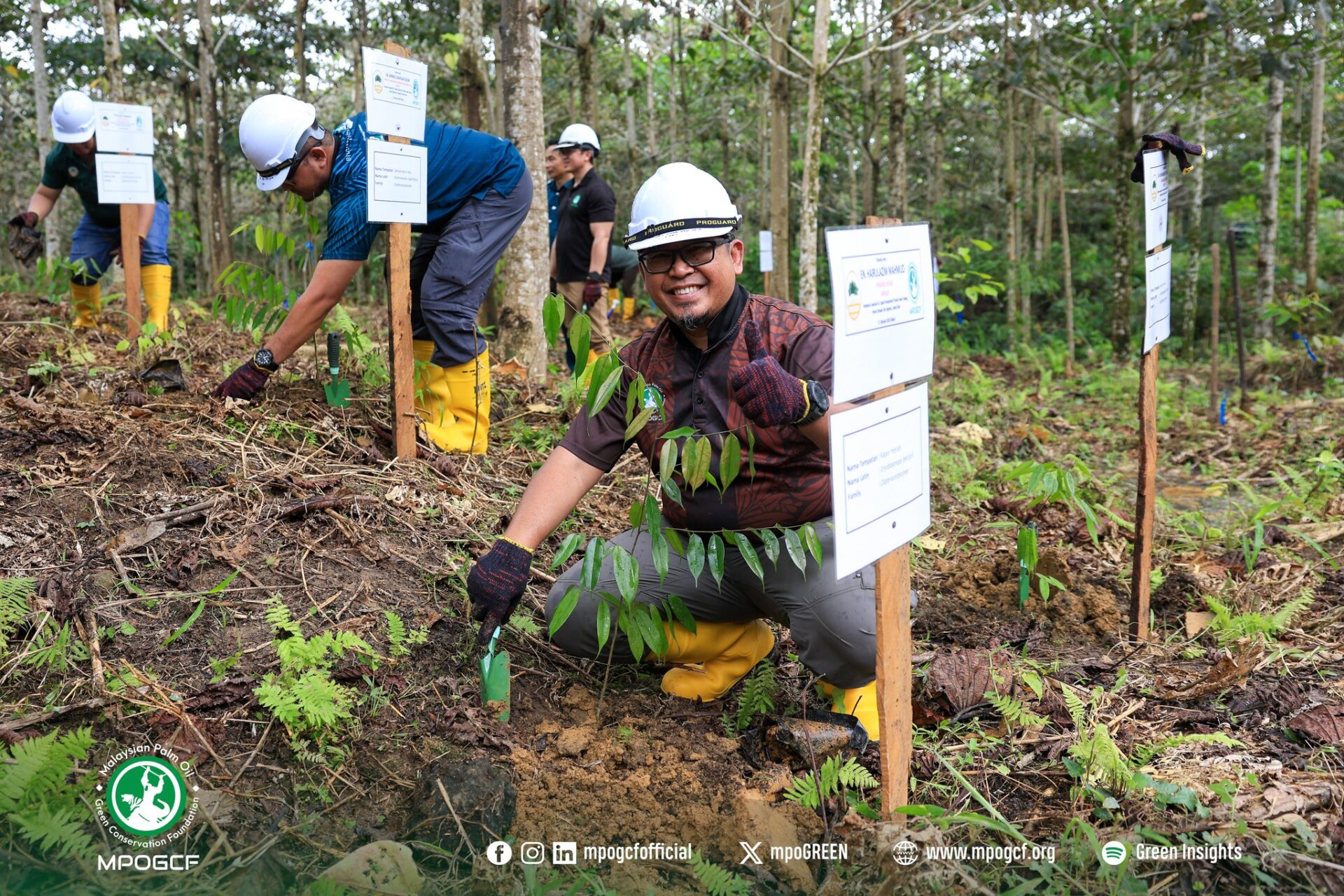
MPOGCF telah mengadakan lawatan kerja bagi Projek ‘The Forest Rehabilitation of Orangutan Habitat at Lower Kawag, Ulu Segama Malua Forest Reserve, Lahad Datu’, di Sandakan pada 9 Februari 2026.
Antara agenda lawatan tersebut termasuk mesyuarat Jawatankuasa Teknikal Projek yang dipengerusikan oleh Timbalan Ketua Konservator Hutan, Jabatan Perhutanan Sabah (SFD), Tuan Indra Purwandita H. Sunjoto sambil disertai oleh Ketua Bahagian Perancangan Sektor Hutan, Rosila Anthony; Pegawai Perhutanan (Daerah Ulu-Segama Malua), Jackly Ambrose; dan Pemelihara Hutan, Fong Pek Yee. Manakala MPOGCF telah diwakili oleh Pengurus Besar, Hairulazim Mahmud; Pengurus Pemuliharaan dan Kemampanan, Ahmad Shahdan Kasim dan Eksekutif Pemuliharaan dan Kemampanan, Daniel Pamin.
SFD menerangkan kawasan terjejas yang ditanam dengan beberapa spesis tempatan pokok perintis (seperti pokok Talisai, Binuang dan Laran) sejak tahun 2019 telah menampakkan pertumbuhan memberangsangkan selain pertumbuhan positif bagi penanaman anak pokok spesis Dipterocarp (kayu keras) seperti Kapur dan Seraya. Ini membuktikan bahawa dengan aplikasi kaedah dan kriteria penanaman serta penyelenggaraan yang sistematik mampu memulihkan kawasan hutan yang terosot.
Penanaman Fasa 2 yang melibatkan keluasan 200 hektar turut menerima pengiktirafan dari pihak audit antarabangsa Preferred by Nature (PbN), setelah memenuhi syarat pematuhan ‘Ecosystem Restoration Field Verification Standard V3.1). Sijil pengesahan ini adalah sah bagi tempoh 5 tahun (Nov 2024 – Nov 2029). Syarat pemberian sijil turut melibatkan aktiviti audit dijalankan setahun sekali bagi memastikan pematuhan kriteria di sepanjang tempoh 5 tahun.
Di dalam lawatan ke Komuniti Nurseri Kg Tampenau, MPOGCF juga dimaklumkan mengenai hasrat komuniti tersebut untuk terus memberi sokongan berterusan kepada projek ini. Lawatan yang dibuat ke beberapa buah rumah komuniti Nurseri turut menunjukkan plot nurseri masing-masing dengan anak pokok yang ditanam.
________________________________________
Prepared by Ts. Daniel Pamin
Executive, Conservation and Sustainability
The Malaysian Palm Oil Green Conservation Foundation (MPOGCF) conducted a working visit for the Forest Rehabilitation of Orangutan Habitat at Lower Kawag, Ulu Segama Malua Forest Reserve project in Sandakan on 9 February 2026. The project site is located within the Ulu Segama Malua Forest Reserve, near Lahad Datu.
One of the key agendas of the visit was the Technical Committee Meeting, which was chaired by the Deputy Chief Conservator of Forests of the Sabah Forestry Department, Indra Purwandita H. Sunjoto. The meeting was attended by Rosila Anthony, Head of Forest Sector Planning Division; Jackly Ambrose, Forestry Officer (Ulu Segama Malua District); and Fong Pek Yee, Forest Conservator.
MPOGCF was represented by Hairulazim Mahmud, General Manager; Ahmad Shahdan Kasim, Conservation and Sustainability Manager; and Daniel Pamin, Conservation and Sustainability Executive.
During the briefing, SFD explained that degraded areas planted since 2019 with several local pioneer species such as Talisai, Binuang, and Laran have shown encouraging growth. Positive progress was also observed in the planting of Dipterocarp hardwood species, including Kapur and Seraya. This demonstrates that systematic planting methods, proper criteria, and consistent maintenance are effective in restoring degraded forest areas.
Phase 2 of the planting programme, covering 200 hectares, has also received recognition from the international audit body Preferred by Nature after meeting the requirements of the Ecosystem Restoration Field Verification Standard V3.1. The certification is valid for five years (November 2024 – November 2029), with annual audits required to ensure continued compliance throughout the certification period.
During a visit to the community nursery in Kampung Tampenau, MPOGCF was also informed of the community’s commitment to continue supporting the project. Visits to several nursery households further demonstrated the community’s active participation, with each household maintaining its own nursery plots and seedlings.